
Simpson Projected and Actual Release
MDOC uses the label “Tentative Release Date.” It is the anticipated date a person may leave an institution after the agency applies sentence rules, documented county-jail credit, and eligible earned time. Maximum discharge is a different date. It reflects the expected end of the sentence without early-release allowances. Parole, ERS, institutional departure, supervision end, and final discharge can each occur at a different point.
The actual release record answers what happened. It should give the event time, type, and destination or receiving authority. A projected date cannot show whether a detainer caused transfer, whether a court changed the sentence, or whether planning delayed movement. MDOC also warns that displayed release types and dates can differ from the final result.
Pretrial Simpson County detainees have no calculated MDOC release date. Their exit may turn on bond, dismissal, trial, a plea, sentence, or another hold. Ask the Simpson County jail and the correct court for the current order and every detainer. A bond date in one case does not free a person held on another matter.
Find Simpson Projected Release Dates
First determine whether the person is in the Simpson County Adult Detention Center or the statewide MDOC system. County of conviction is not the same as present location. A person sentenced in Simpson County may be placed anywhere in MDOC. Someone who disappeared from the county jail may have transferred to state custody and not been released to the community.
- Collect the full booked name, date of birth, county booking number, MDOC number, and Simpson court case number when available.
- For a state prisoner, open the MDOC inmate search. Search by name or MDOC number and match the identity before opening details.
- Read Entry Date, Location, Location Change Date, sentence details, county of conviction, and the exact Tentative Release Date field.
- For a county-jail sentence, ask the jail and sentencing court for the commitment, credited days, calculation policy, holds, and current release entry.
- If the public information is unclear, request the MDOC time-computation summary, custody-location history, release record, and discharge certificate.
The official MDOC search form is the statewide path for sentenced prisoners:
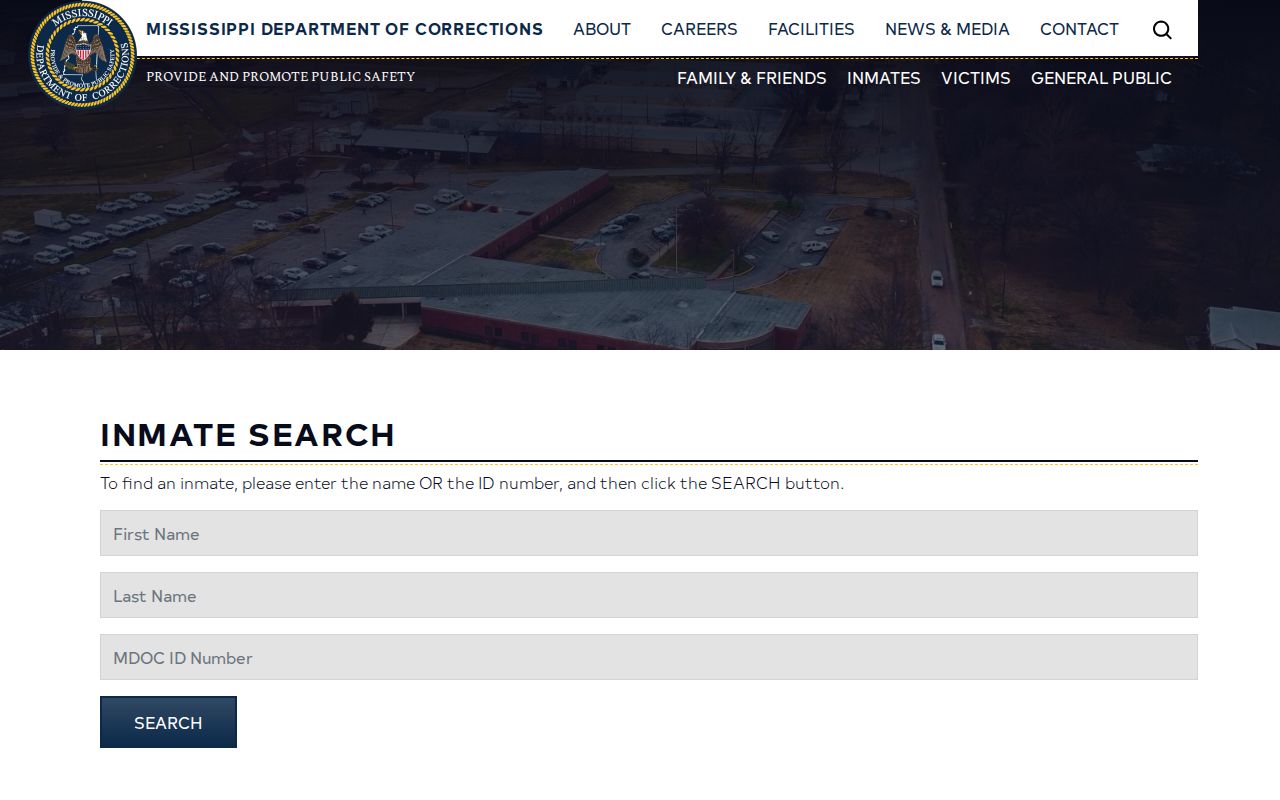
The form begins an identity search. It does not certify that every fully discharged person will remain searchable.
When a name vanishes, do not convert the miss into a release date. Request records. The full Simpson County released-inmate lookup branches from jail records to the court, MDOC, VINE, and federal systems when the custody path is uncertain.
Note: Simpson County of conviction links a sentence to the court but does not show where MDOC currently houses the person.
Simpson Earned-Time Release Rules
Miss. Code §47-5-138 allows eligible sentences within its date framework to earn up to 4.5 days for each 30 days served, with an ordinary cap of 15 percent of the sentence. This creates the familiar “serve 85 percent” shorthand. It is not a universal release formula. Eligibility, sentence date, excluded offenses, other credits, disciplinary loss, and special rules can change the computation.
Under subsection (6), early release through that provision is earned-release supervision. ERS means the person remains in inmate status and under MDOC jurisdiction while outside an institution. Revocation can require service of the remainder, and time in the community may not reduce that remainder. Physical release to ERS is therefore not the same as sentence discharge.
Miss. Code §47-7-3.2 adds minimum-service floors for offenses committed on or after July 1, 2014. In broad terms, it addresses 25 percent or ten years, whichever is less, for defined nonviolent offenses and generally 50 percent or twenty years, whichever is less, for crimes of violence, subject to statutory definitions and exceptions. Those floors are not the same as the earned-time cap or parole eligibility.
MDOC combines the controlling sentence, eligible credit, jail credit, and legal rules. It computes the individual date. A person or family member should not subtract a general percentage and report the result as guaranteed. Review the current statute and the person's actual time sheet.
Simpson Jail Credit and Discharge
Documented pretrial credit can alter a Simpson County state sentence. MDOC guidance says eligible county-jail time connected to the cause of incarceration is deducted after documentation from the county of conviction. A missing or disputed credit should be checked against the Simpson commitment, sentencing order, jail admission and release entries, and MDOC time computation.
The difference between tentative release and maximum discharge also matters. Tentative release anticipates institutional departure after applicable adjustments. Maximum discharge is the expected sentence end absent early allowances. A person may leave the institution on parole or ERS while legal custody or supervision continues. At actual release, MDOC guidance says the person must receive a discharge certificate, although that certificate's legal meaning depends on whether the sentence fully ended or the person entered supervision.
The MDOC detail interface example demonstrates the exact Tentative Release Date label:
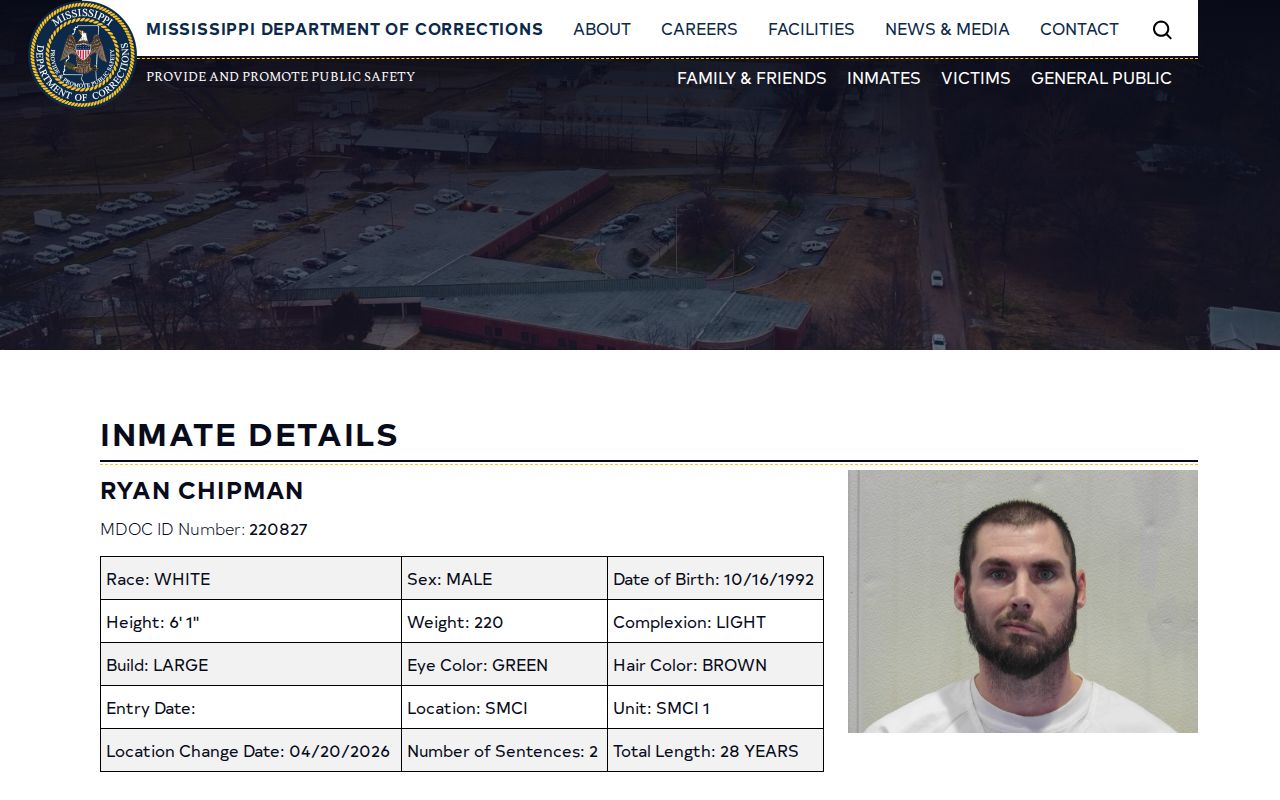
The example proves the field exists in the interface. It is not evidence that the pictured person has been released or has a Simpson County case.
State-prison release planning may take 30 to 45 days under the MDOC Family and Friends Guide. An approved in-state residence may also matter for discretionary ERS. These planning steps can separate a forecast from the date of physical movement.
Note: A missing Simpson jail-credit entry should be reconciled with the county court and MDOC before relying on the displayed forecast.
Why Simpson Release Dates Change
A date can move for more than one reason, and not every change is a disciplinary event. Corrected records may add county-jail credit. New or amended sentences can change how terms run. A detainer may leave the MDOC sentence date intact while changing the destination at release. Parole or ERS decisions may also alter institutional departure without ending legal supervision.
| Factor | Possible effect | Record to check |
|---|---|---|
| Verified jail credit | Can reduce time left when the credit qualifies | Simpson jail entries, court order, MDOC time sheet |
| Earned-time eligibility or loss | Can move the tentative date within the statute | MDOC computation and disciplinary record as available |
| Additional or amended sentence | Can add time or change concurrent and consecutive terms | Current court orders and MDOC sentence entries |
| Detainer or hold | May change where the person goes, even if one term ends | Release record and receiving-agency entry |
| Parole or ERS decision | May permit community placement while supervision continues | Board action, MDOC movement, supervision record |
| Release-plan approval | Can affect physical movement from an institution | MDOC release and planning records |
Mississippi parole eligibility under §47-7-3 depends on the offense, sentence, and date. It remains discretionary where applicable. Section 47-7-18 can create an administrative release path for a qualifying person. Neither statute lets a reader turn the public tentative date into a promise.
Simpson County and MDOC Dates
A Simpson county-jail sentence that was not committed to MDOC does not inherit the MDOC earned-time formula by default. Ask the sentencing court and jail for the commitment terms, credited days, any applicable county calculation policy, and the actual closing entry. The sheriff's record should also state whether the jail released the person to the community or transferred the person to another authority.
For state custody, MDOC is the time-computation custodian. The Simpson Circuit Court supplies the judgment, amendments, and jail-credit findings, but MDOC maintains the prison movement and computation records. If the sources disagree, look for later court orders, delayed data entry, additional sentences, or credit corrections. Do not choose whichever date is earlier.
Federal and immigration dates belong to other systems. A BOP release date describes BOP custody, while an ICE locator result concerns immigration custody. Neither should be imported into a county or MDOC calculation. A Simpson jail exit to BOP, ICE, another county, or medical custody is a transfer until the receiving system establishes what happened next.
Confirm Simpson Release Dates
Near a possible event, register through the Simpson County VINELink inmate search for available release or transfer alerts. When a notice arrives, record the contributing agency and time. Then ask that agency for the final release or movement entry. VINELink is timely notice, not a certified historical record.
For MDOC, request the discharge certificate, nonexempt time-computation summary, and custody-location history. MDOC's public-record policy requires a signed, specific request and lists the Legal Division at 301 North Lamar Street, Jackson, MS 39201, fax 601-359-5735, and legalpublicrecords@mdoc.state.ms.us. The policy provides response and fee details, including ordinary production timing and copy charges.
For the Simpson jail, use the official Sheriff's Office contact and call administration at 601-847-2155 or dispatch at 601-847-2921 for routing. Ask whether the booking closed, the exact date and time, the release type, and the receiving agency. Pair that answer with the controlling order held by the Simpson County Circuit Clerk or other correct court. This final check distinguishes a planned date from the physical event and distinguishes community release from transfer.
A written MDOC request should identify the person, MDOC number, date range, and specific existing records. Ask for electronic copies and a cost estimate. MDOC policy states that inspection is by appointment during working hours, a written response is generally due within seven working days, and production ordinarily follows by fourteen working days after request or payment unless more time is needed. The policy lists copies at 15 cents per page and staff time above one hour at the lowest qualified rate.
For county records, request the final booking-and-release sheet and the exact release-type field as maintained. If it says “transfer,” ask for the destination. Pair that record with the final Simpson court order. An arrest, booking entry, sentence, forecast, and release are separate dates. Keeping them separate is the best way to resolve a date conflict without turning a planned event into a false release claim.