
Simpson Parole and Probation
Parole and probation can both place a person in the community under rules, but the legal paths differ. Parole usually follows part of a state prison sentence. The Mississippi State Parole Board decides many parole matters, while Mississippi Department of Corrections Community Corrections manages day-to-day supervision. Probation is ordered by a court, often instead of incarceration or after a shorter custody term. A person released from the Simpson County Adult Detention Center on bond is not automatically on either status. Bond is a court-controlled pretrial release.
Earned-release supervision, or ERS, adds another layer. Under Mississippi law, an eligible person may leave an MDOC institution yet remain in inmate status and under MDOC authority until the sentence expires. Complete discharge is different again. It marks the end of the sentence or supervision reflected in the controlling record. The comparison below helps identify which office and document can answer a Simpson County status question.
| Status | How it begins | Best verification | What ending requires |
|---|---|---|---|
| Parole | Release from a prison term under parole authority | MDOC parolee search, Board action, and Community Corrections | Discharge or other final supervision record |
| Probation | Court order tied to a criminal case | Sentencing or probation order and supervising office | Court or supervision completion record |
| ERS | Eligible release under MDOC earned-release rules | MDOC time, movement, and supervision records | Sentence expiration or discharge documentation |
| County bond | Court-authorized pretrial release | Jail closing entry and bond order | Case disposition, not an MDOC discharge |
- Parole
- Conditional community release during a prison sentence.
- Probation
- Court-ordered supervision that is not the same as parole.
- Discharge
- The documented end of custody or supervision under the sentence.
- Absconder
- A supervision classification that must come from an authorized record, not from a missing web result.
Verify Simpson Post-Release Supervision
Start with the system that imposed or manages the status. The MDOC parolee search accepts first name, last name, MDOC number, city, and county. A matching result supports that the person is presently recorded on parole. It is not a full list of probationers or all former prisoners. Confirm the identity with an MDOC number or other reliable identifiers before treating the result as a match.
- Identify whether the Simpson County matter involved a county bond, a court probation order, an MDOC prison sentence, parole, or ERS. Use the court case and agency numbers when available.
- Search the MDOC parolee index by the most specific fields. Read the displayed status literally and do not infer more than the record says.
- Contact the Mendenhall Probation & Parole Office for routing or a public status-verification process. Field-officer files may be exempt from disclosure.
- For parole, request the Mississippi State Parole Board's final action or minute. There is no verified public decisions database that replaces this record request.
- Pair the supervision record with the MDOC movement or release record. A Board grant date and the date a person physically leaves an institution may differ.
If the person came only from the Simpson County jail, begin with the Simpson County Sheriff's Office and the sentencing court. Ask whether the booking ended in community release or transfer to MDOC. The county closing event, court order, and state record should agree before a status is described as parole. The broader Simpson County released-inmate search and records path explains how to resolve that custody handoff.
Note: A parolee-search miss can reflect another supervision type, a changed record, or an incorrect identity, so it does not prove discharge.
Simpson County Supervision Office
The local MDOC contact is the Mendenhall Probation & Parole Office. MDOC lists Jason Carney as Community Corrections Director. The office can route a purpose-neutral question about a public supervision status or explain the proper request channel. It may not disclose private field notes, victim information, or other exempt material. Ask for the public status or the correct custodian instead of requesting an officer's whole file.
Mendenhall Probation & Parole Office150 West Court Avenue
PO Box 307
Mendenhall, MS 39114
Phone: 601-782-9512
Fax: 601-782-4471
The official office listing is also useful when an MDOC result shows community supervision tied to Simpson County. County of conviction and supervision location are not always the same, so ask the office to confirm routing rather than assuming that every Simpson conviction stays with Mendenhall. For written proof, request an existing verification, discharge record, or Board action from its actual custodian.
The official Mendenhall office listing shows the local point of contact:
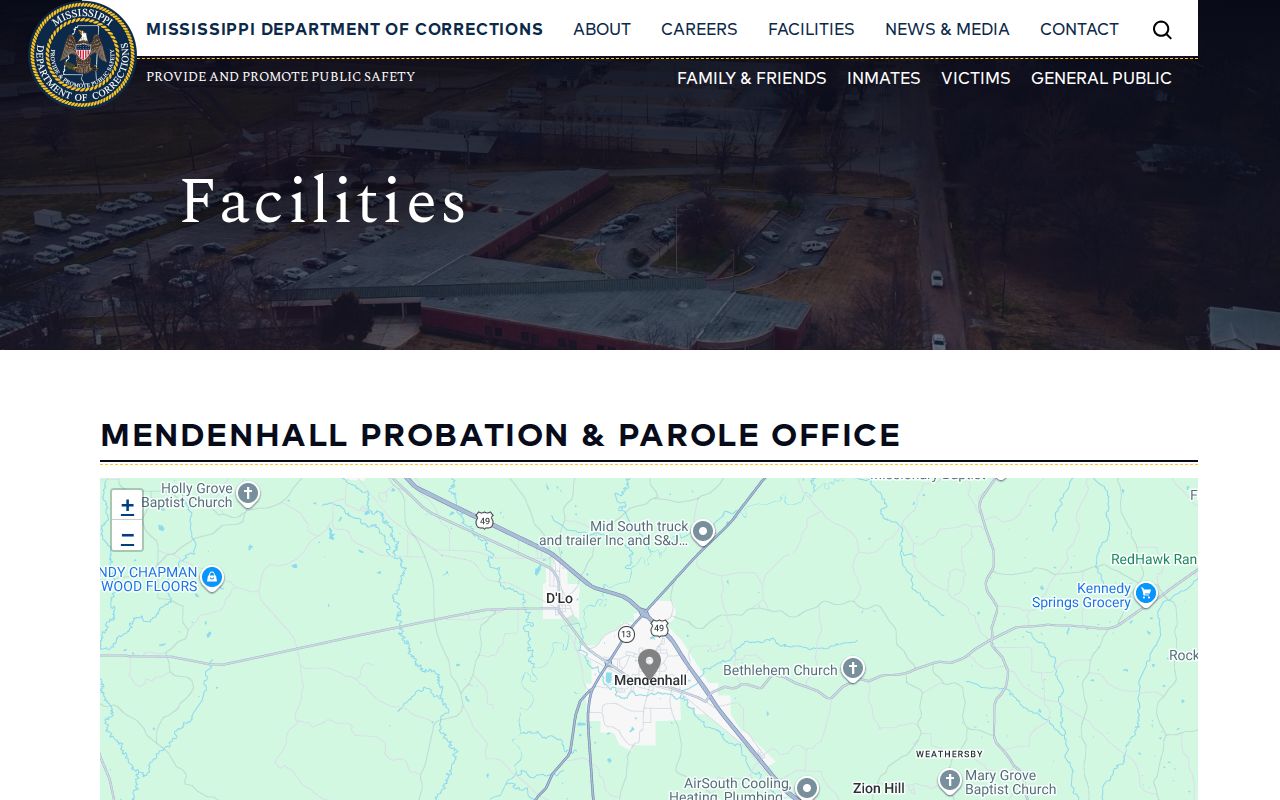
The image confirms the named local MDOC channel, not any individual's placement or supervision status.
Simpson Release at New Way
New Way Transitional Facilities #1 is a distinct Simpson County post-institution path. MDOC categorizes the Mendenhall location as a transitional facility. It is not the Simpson County jail, and the directory does not establish that any named person lives there. A placement can follow institutional custody while parole, ERS, or another supervision status remains active.
Verify legal status through the parolee search, the Mendenhall office, and the relevant MDOC or Parole Board record. Residence at a transitional facility is not the same as complete sentence discharge. Likewise, leaving a prison for New Way may be a physical release from the institution while legal control continues. The exact MDOC movement entry and supervision record should define the change.
The MDOC New Way directory entry documents this local transition resource:
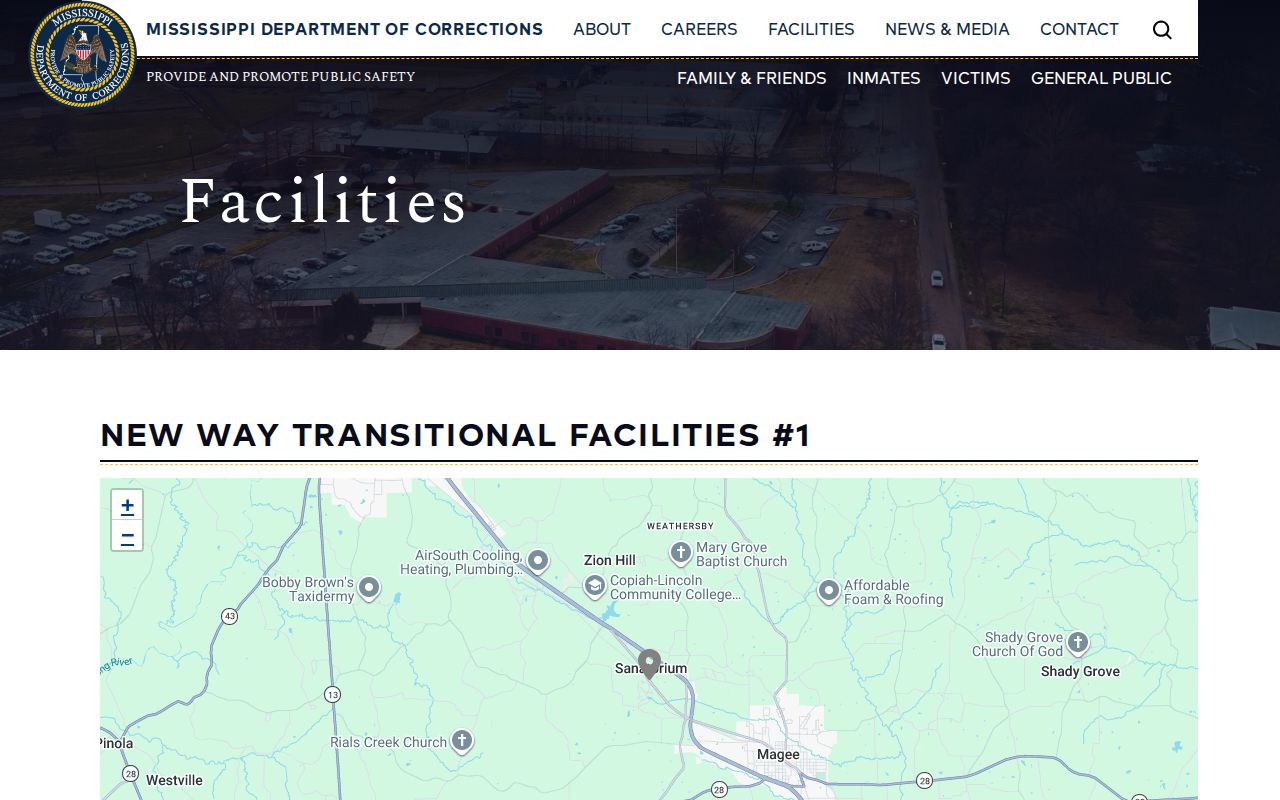
That official listing supports the facility's role and location, while person-specific status still requires an individual MDOC or parole record.
Note: Transitional residence, parole, ERS, and final discharge are separate facts and should never be collapsed into one release label.
Simpson Parole Board Records
The Mississippi State Parole Board is separate from MDOC's daily community supervision. No official public hearing calendar or decisions-search database was found. Board administrative Rule 2.1 states that hearings are closed, with staff arranging and providing individual notice. Rule 2.4 requires a minute-book copy of official actions and reasons. Rule 2.6 provides the records route. For a Simpson County parole question, request the named person's final action or minute instead of relying on a nonexistent online calendar.
Possible actions include a grant, denial, continuation, rescission, or revocation, but the returned record's exact language controls. Rule 2.3 provides decisions to the offender and written notice to the victim or family. Disclosure to others is considered case by case, and sensitive material may be removed. The official Parole Board directory lists 239 North Lamar Street, Suite 501, Jackson, MS 39201, phone 601-576-3520, and fax 601-576-3528.
Eligibility is not a promise. Miss. Code §47-7-3 makes eligibility depend on the offense, sentence, and date. Section 47-7-18 also permits an administrative release route for qualifying people who meet its conditions, so not every community release comes from a conventional Board hearing.
Simpson Supervision Changes and Warrants
Supervision conditions come from the governing order and agency, not from a generic list. A violation allegation may lead to an agency response, a court filing, a warrant, a revocation process, or no public change at all. No official statewide public absconder or supervision-warrant list was located in the Simpson research. A person disappearing from the parolee search is therefore not evidence that the person absconded.
Mississippi SAVIN may issue notices about an abscond-supervision change, return to custody, transfer, or release when a participating agency supplies that event. Such an alert is a prompt to check the source record. It is not a warrant database. For a warrant tied to a Simpson case, contact the court or proper law-enforcement custodian and match the person by case or agency number. For a revocation, seek the signed order and the MDOC custody or movement entry.
Simpson Supervision Discharge Records
Supervision ends through a documented legal event. For an MDOC sentence, the strongest completion proof is a discharge certificate or final time and supervision record. A parolee-search entry confirms a current recorded status at the time of the response. Its later absence does not state why the entry changed. Request the discharge document when the end date matters.
Federal supervised release belongs to the federal court and probation system, not the Mississippi parolee search or Mendenhall office. A BOP result that says a person is released concerns federal prison custody and does not describe federal supervision. Keep that path separate from Simpson County probation and Mississippi parole.
Probation completion should be tied to the sentencing court's order or other official completion record. If supervision was revoked, an amended court, Board, or MDOC record may show a return to custody. Keep the grant date, physical release date, supervision start, supervision end, and maximum discharge date separate. They can occur on different days and answer different questions.
Mississippi public-record rules allow requests for existing, nonexempt records, but supervision field files can be restricted. Ask narrowly for the final action, status verification, discharge certificate, or minute. If part is withheld, request segregable nonexempt portions and the cited exemption. That approach yields a clearer Simpson County parole or probation record than a broad demand for an entire case file.
When records conflict, compare the dates and the office responsible for each field. The court controls its probation order, the Board controls its parole action, and MDOC controls its movement and supervision entries. A later revocation or amended order may explain why an older document no longer matches the current status. Keep the source wording and seek the later record instead of blending the two accounts.
Note: Final discharge requires an official completion record; elapsed time or disappearance from a public search does not establish it.